Batik Versus Songket
Batik and songket are two traditional textiles of Malaysia, but they are made by very different techniques. Batik is a resist dyeing process using wax, while songket is a decorative weaving technique with gold or silver threads in the fabric itself. These differences in making decide both how a textile looks and how much it costs.
On this page
How the two textiles are made
Batik is classic wax-resist dyeing, in which patterns are drawn using wax, and cloth half-patterned with resist then dyed, washed, and waxed anew. Wax not only blocks the dye but allows one color to go over another, so that many clever effects are possible. It is less laborious than weaving metal thread into cloth, but a complex pattern still needs a steady hand, and that shows in the price. Batik is made across the region — Indonesia most famously — and Malaysia counts it among its own crafts.
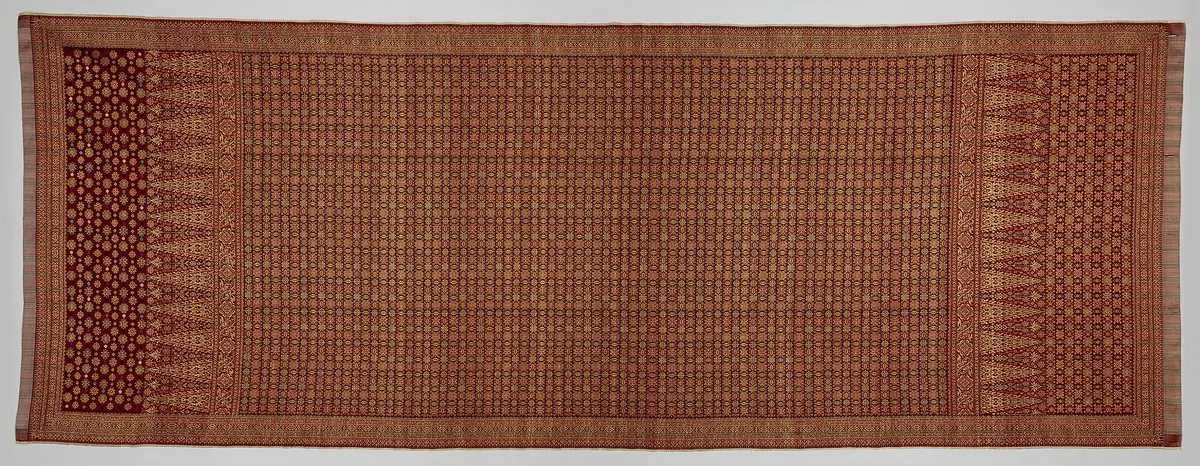
Songket is a type of textile in which gold or silver threads are woven into the fabric by hand, not embellished on top, on a hand loom. These metallic threads create elaborate patterns, an effect that is unlike batik. It requires specialized loom work, skilled craft, and real gold or silver, which elevates both the cost and status of the finished songket product.
What a buyer can check in hand
Checking the back of the cloth can show the technique. Real batik will show a similar effect on the back, because dye and resist go through the width of the cloth. Printed fabric applied for decorative effect picks up on only one side and may wash off. The edge or margin can also be revealing: in hand-made cloth the weave will show straighter, without repeating patterns, and any resist dots or lines will trail off evenly at the edges of the work.
A label or maker’s tag will usually name the technique. What it leaves out — where the cloth was made, and what the metal thread actually is — is fair to ask about at the counter.
Why one costs more, and where each sits on formality
Hand work costs more than machine printing, so hand-drawn batik and songket both sit well above printed cloth, and songket sits above batik again because of the thread. Price aside, the two sit differently on the formality scale: batik is worn to the office and to a family lunch, songket to a wedding or a ceremony.
What to ask before paying
Ask how the cloth was made and with what thread, and watch what happens to the price: a figure that falls quickly usually belonged to a cheaper process in the first place.
Two questions do most of the work: how was it made, and with what?