Buying Real Batik
The first defense in buying real batik in Malaysia is to turn the cloth over. Check if the design shows through to the other side. Genuine batik penetrates, because the wax goes through the fabric and the dyeing bleeds to the back. Printed imitation tends to sit on the surface and show just on the 'front' of the cloth.
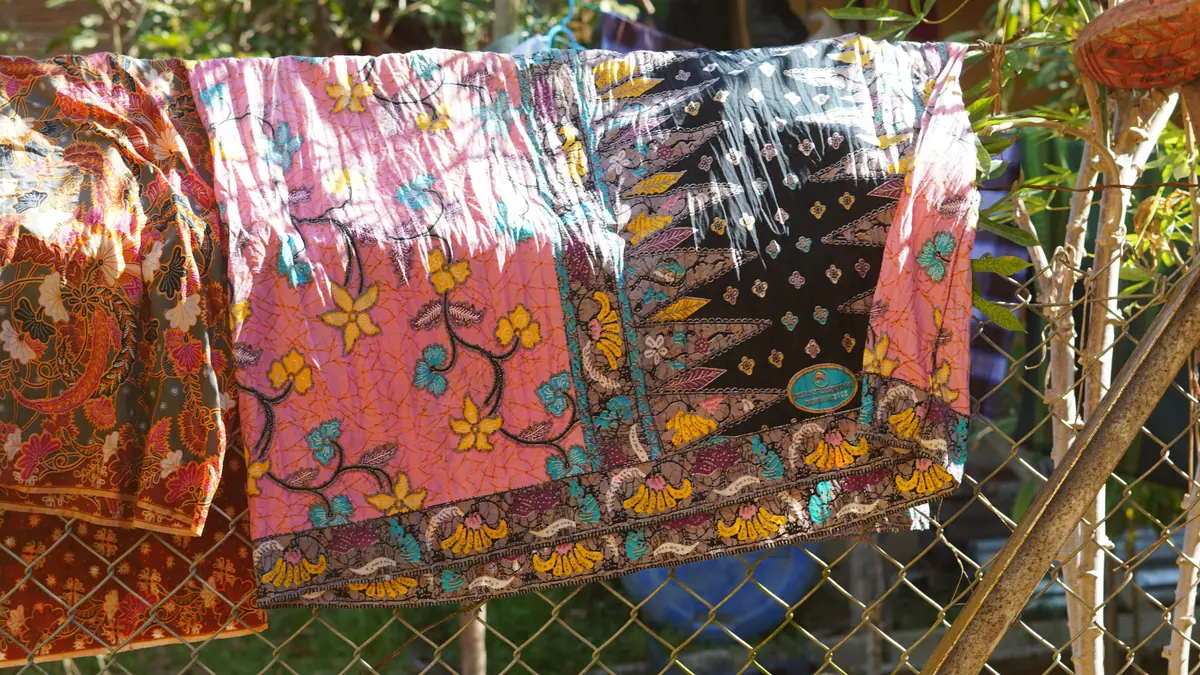
What the cloth tells you
There are two or three more clues, and all of them are in the cloth rather than the label.
Look closely at the edge of a motif. Where the wax cracked before dyeing, a fine web of dark lines has run into the pattern — nobody prints that on purpose, and it is the surest mark of wax.
Hand-drawn batik never repeats exactly. The same flower comes out a shade larger at one end of the cloth than the other, because a hand drew it twice; a machine print repeats to the millimetre.
The words on the label
Batik tulis is drawn by hand with a canting, a small copper spout that lays a line of hot wax onto the cloth. A single length can take days, and the result has the unevenness of a drawing.
Batik cap is stamped with a copper block. It is still wax, still real batik, and it repeats more regularly because the block does. Both are made in Malaysia, Kelantan and Terengganu above all.
Then there is printed cloth, which has never met wax at all. It is often sold honestly as batik-patterned or batik-style; the words to notice are the ones that describe a pattern rather than a process.
Terms get used loosely at a market stall. Rather than argue about a word, turn the cloth over and ask the seller to show you the back.
Price as a clue
Price follows the process: hand-drawn costs several times stamped, and stamped costs several times printed. You do not need the exact figures to use this — if a length is priced like printed cloth, that is usually what it is.
The protection is in the cloth, not in a receipt. Turn it over, look at the edge of a motif, and the question answers itself.