Tying A Sarong
A sarong is a tube of cloth, and the whole skill is in the fold that holds it shut. Step in, pull it to the waist, take up the slack and tuck it — the rest is which fold, worn by whom, and for what occasion.
The basic wrap
Step into the tube with both feet and draw it up to the waist. Hold the cloth out to either side so that it stands away from the body, then bring the slack across the front, one side over the other.
Fold the top edge over itself twice and roll it down against the waist. That roll, not a knot, is what keeps a sarong up; pulled tight it will hold through a working day.
Keep the fastening at one hip rather than square at the front, and tuck the loose end down inside the roll when you are done.
Men’s and Women’s Use
For men, the short formal cloth worn over the baju melayu is the samping, folded to the knee and worn to the mosque and to ceremonies. The everyday cloth is the kain pelikat, a checked tube worn at home, on the way to the shop and at prayers.
Men’s cloth tends to be checked or plain, in dark green, navy, maroon or grey.
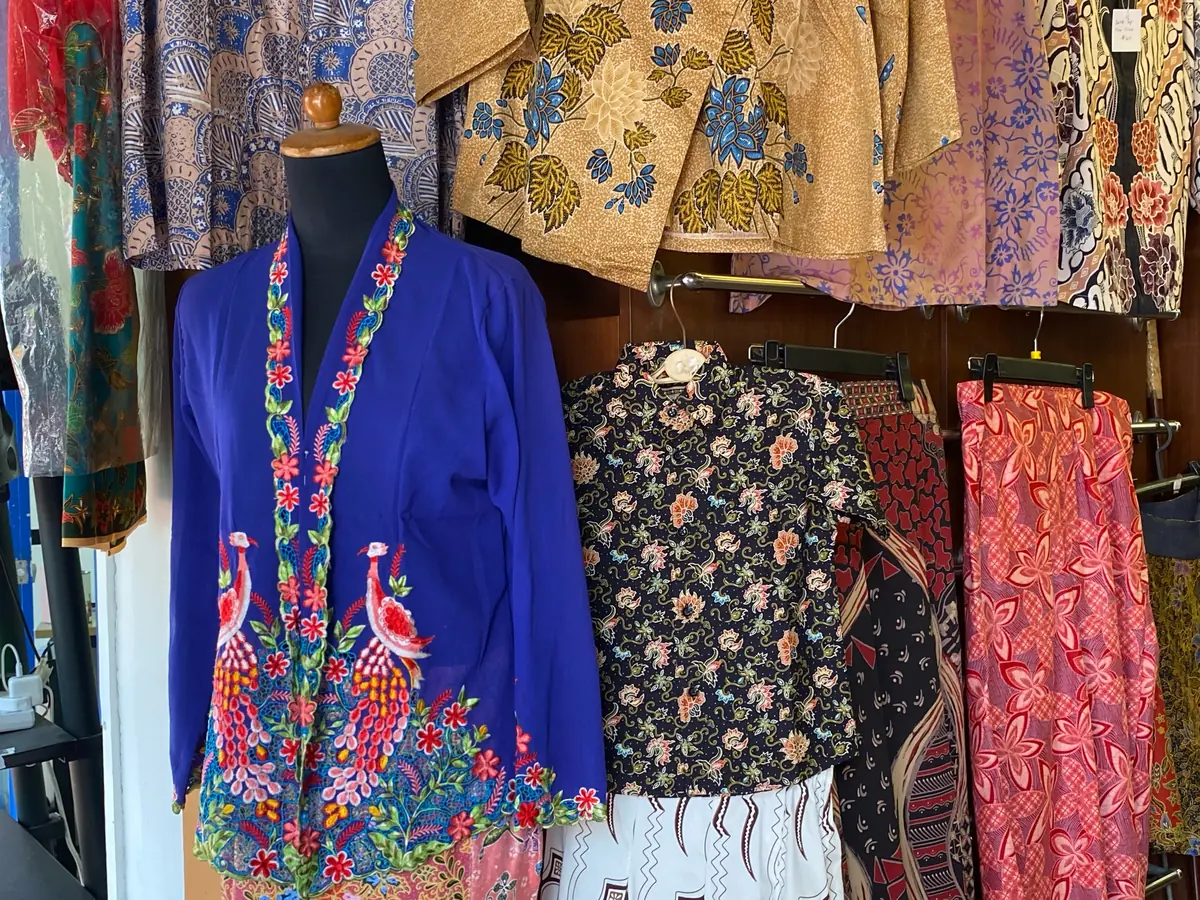
Women’s cloth is usually kain batik, patterned and worn long, to the ankle, most often with a kebaya or a loose blouse over it.
The folded, wave-like drape down the front has its own name, ikatan ombak mengalun, and it is the difference between a cloth that hangs and a cloth that has been arranged.
Moving in a Sarong
Walk in short steps: a long stride pulls the wrap open at the front.
Sitting down, gather the cloth with one hand and keep the knees together; standing up, hold the roll at the waist rather than the hem. After a day or two none of this needs thinking about.