The Five-Foot Way
The five-foot way, or kaki lima, is the covered strip where the shop meets the street in Kuala Lumpur. This covered strip, a remnant of British colonial planning, offers more than just architectural style: it's a ubiquitous micro-space that gives the shophouse district its rhythm, sheltering pedestrians from the tropical sun and rain.
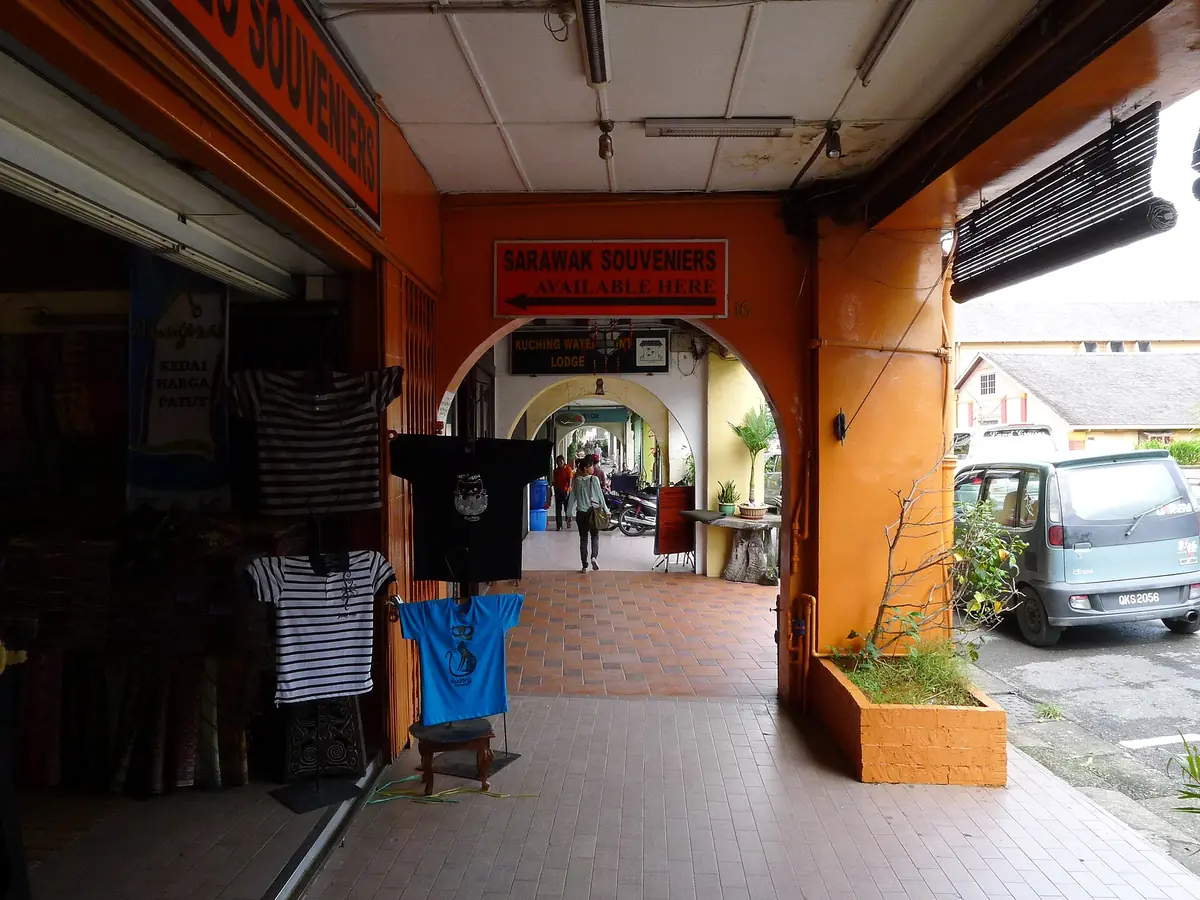
Along Petaling Street the kaki lima runs almost unbroken, and it is still the liveliest strip in the block: the buffer where the shop spills out and the street stops.
Shophouse Rule and Origin
The rule came from the 1822 town plan drawn for Singapore, which required a uniform frontage with a verandah of a set depth, so that the covered passage ran continuously along the street. The width of five feet was fixed later, and the rule travelled north into Malaya with the shophouse itself.
Under colonial building rules, the ground-floor front of a shophouse had to be a public walkway at least five feet deep — private property, built and paid for by the owner, and open to anyone on foot.
Shelter, Trade, and Shared Space
The point of it was plain: a pedestrian could walk the length of a street under cover, out of the sun, out of the rain and off the road.
It was never only a walkway. The strip doubled as work space — a tailor’s table, a barber’s chair, a stack of crates, a hawker’s cart — and that double use is the argument about it that has never been settled.
Kuala Lumpur Today
It is not everywhere. Walk a few streets in the old centre and the cover stops, restarts, narrows to a doorway or disappears where a block was rebuilt.
Where it survives whole, it does the same work it did a century ago: five feet of shade, a place to stand out of a downpour, and the thin public room between the shop and the road.